Air Purification
Advanced HEPA air scrubbing and filtration to eliminate airborne contaminants, mould spores, and microscopic pollutants after water damage.
View Service Details
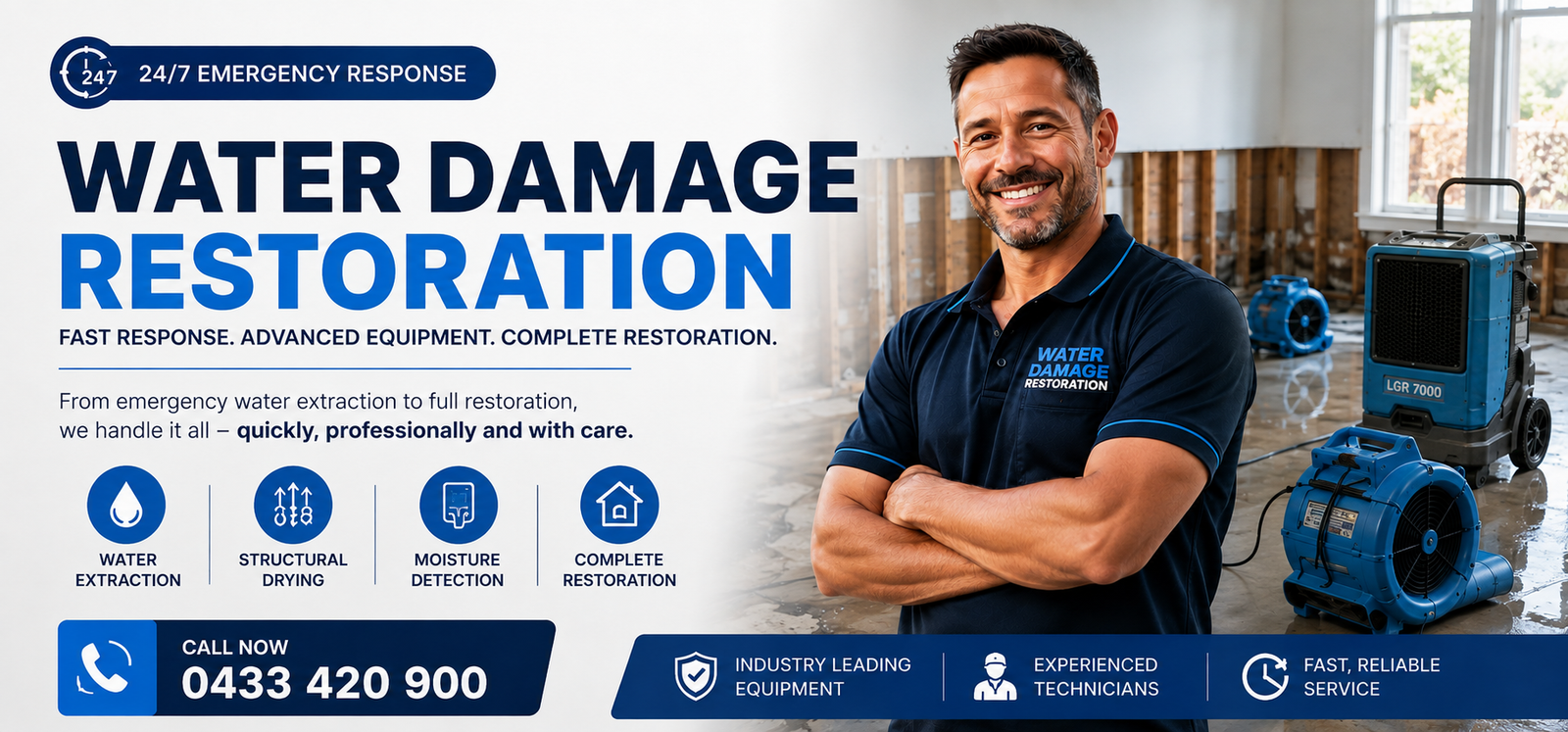
When water damage strikes, every minute matters. Our certified restoration specialists arrive rapidly with heavy-duty dehumidifiers, moisture meters, HEPA air scrubbers, and extraction units to restore your home or business.
Advanced HEPA air scrubbing and filtration to eliminate airborne contaminants, mould spores, and microscopic pollutants after water damage.
View Service DetailsIndustrial LGR dehumidifiers and high-velocity air movers to dry deep moisture trapped inside walls, subfloors, and ceiling cavities.
View Service DetailsThermal fogging and botanical deodorization to neutralize damp, musty, and mildew odours at the molecular level.
View Service DetailsProfessional containment, anti-microbial treatment, and safe mould eradication to protect indoor air quality and structural integrity.
View Service DetailsSpecialist Category 3 black water extraction, deep disinfection, and biohazard sanitisation to restore safe and hygienic conditions.
View Service DetailsSpecialized injectidry mat systems designed to draw moisture out of hardwood, timber, and floating floors without causing warping.
View Service DetailsRapid high-volume water extraction using truck-mounted units and submersible pumps to remove standing water immediately.
View Service DetailsHeavy-duty carpet extraction, underlay drying, sanitization, and restorative steam cleaning to prevent permanent staining and browning.
View Service Details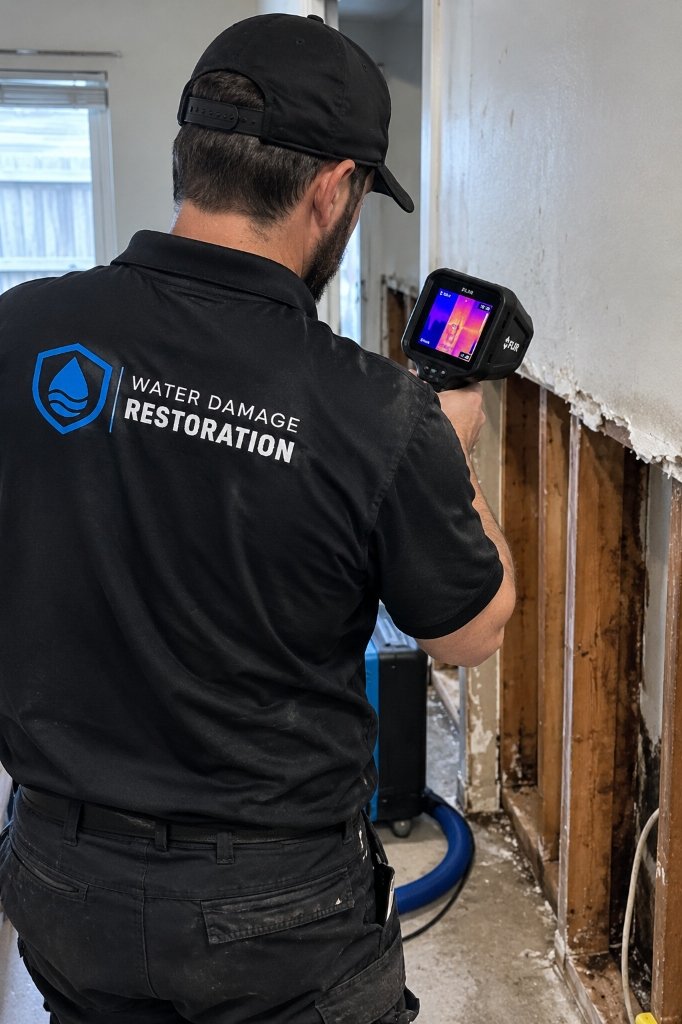
We understand the stress and urgency when water infiltrates your home or business. Our certified restoration technicians respond with state-of-the-art moisture detection and industrial extraction gear.
A methodical, scientific approach to ensure your property is completely dry and safe from hidden damage.
We perform an emergency moisture assessment using infrared cameras and moisture meters to pinpoint all affected areas and identify water sources.
Using industrial pumps and high-powered vacuum extractors, standing water or sewage is removed rapidly to stop liquid spreading further.
Heavy-duty air movers, injectidry mat systems, and commercial dehumidifiers draw moisture out of timber floors, carpets, drywall, and ceilings.
Surfaces are disinfected, sanitized, treated with antimicrobial solutions, and purified with HEPA scrubbers to eliminate mould spores and odours.
We conduct final moisture readings to ensure 100% dry standards are achieved, review the property, and provide complete documentation for insurance claims.
No matter the origin of the flood or leak, our experienced team has the specialized gear to resolve it.
High-pressure mains ruptures causing rapid indoor flooding.
Heavy downpours and overland flood water entry.
Damaged tiles or gutters allowing water into ceiling cavities.
Hose bursts or overflow soaking laundry and adjacent hallways.
Kitchen plumbing failures damaging subfloors and timber joinery.
Tank leaks or pressure relief valves releasing large volumes of water.
Sewer backup or clogged stormwater drainage overflow.
Category 3 sewage backup requiring specialized decontamination.
Upper level bathroom leaks seeping through lower floor ceilings.
Slow hidden leaks behind fridges, water filters, or AC condensation units.
Find answers to common questions about water damage response, carpet drying, sewage cleanup, and insurance claims.
Don't wait for moisture to spread. Speak directly with a local restoration expert right now or contact our 24/7 emergency hotline.
Mobile emergency response vehicles stationed across the Southern Peninsula for immediate callouts in Rye, Blairgowrie, and Sorrento.
Contact us to confirm availability in your suburb. We dispatch technicians 24 hours a day, 7 days a week.
Practical guidance for Rye property owners, holiday-home hosts and property managers dealing with unexpected water entry and damp conditions.
Coastal properties around Rye can have different maintenance needs depending on their age, construction, exposure to wind-driven rain and how regularly they are occupied. A small amount of water entering through a roof junction, window frame or external doorway can affect internal finishes before the source becomes obvious.
For owners and managers, the important first step is to establish where the water entered, which parts of the building were affected and whether the problem is continuing. These details help distinguish a recent leak from a recurring issue that may need building repairs as well as water damage restoration.
If water has entered your Rye property, record the affected areas and arrange the appropriate assessment. Restoration work should address the damage already present, while the underlying entry point may require a roofer, plumber or qualified building professional.
A holiday home can remain unoccupied for days or weeks between visits. During that time, a leaking appliance connection, failed pipe fitting or roof leak may go unnoticed. The longer a water problem remains undiscovered, the greater the chance that flooring, cabinetry and other building materials will be affected.
Owners and property managers can reduce the time between a problem developing and its discovery by arranging regular property checks. Look for fresh water marks, damp patches near plumbing fixtures, changes around window frames and unusual smells in rooms that have remained closed.
Where a property will be vacant for an extended period, consider suitable water shut-off arrangements and ask a qualified plumber about precautions appropriate to the plumbing system. Any inspection routine should reflect the property's condition and known maintenance issues.
Rain-related water entry does not always appear as a puddle. Discolouration near a ceiling, paint lifting beside a window, damp skirting or a change in the appearance of timber flooring may point to moisture reaching an internal surface.
Pay attention to whether the same area becomes damp after particular weather conditions. Note the location, date and circumstances, and photograph any visible changes. This information may help a building professional investigate the source and help a restoration team understand the reported history.
Avoid assuming that every damp patch comes from rain. Plumbing faults, appliance leaks, condensation and other causes can produce similar signs. Identifying the actual source matters because drying the affected area alone will not prevent water from returning if the underlying problem remains.
Holiday rental properties often have short changeover periods between guests. A leak reported near the end of a stay may need prompt attention, particularly if water has reached a bedroom, living area or kitchen. Property managers should establish which areas remain usable and whether the issue needs immediate professional attention.
Clear communication between the guest, host, property manager and relevant trades can help prevent important details from being lost. Record when the issue was first reported, what was observed, which immediate actions were taken and whether the water source has been isolated.
Do not reopen an affected room solely because visible water has been removed. The condition of the materials, possible contamination and any electrical or structural concerns should be considered before the area is returned to use.
Water damage can involve several separate tasks. The original leak may need repair, affected materials may need attention, and damaged finishes may require reinstatement after the property is ready. These tasks do not always fall under the same trade or form part of the same service agreement.
Before work begins, establish what the restoration scope includes and which repairs need to be arranged separately. For example, resolving a roof leak and treating the resulting internal damage are related but distinct jobs.
Property owners and managers should keep a clear record of who is responsible for each task, any access arrangements and the outstanding work. This makes it easier to coordinate contractors and understand what remains before the affected rooms can be used normally.
Good records can help owners understand how an incident developed and what work followed. Take photographs of visible damage when it is safe to do so, note when the problem was discovered and retain relevant communications, invoices and contractor reports.
If you intend to contact your insurer, check the requirements of your particular policy before discarding damaged items or authorising non-urgent work. Ask whether inspection, approval or specific supporting documents are required. Insurance cover and reimbursement depend on the policy terms and the insurer's assessment.
Keep restoration records separate from estimates for unrelated building repairs where possible. A clear timeline and organised paperwork can make it easier to explain which damage was observed and which actions were taken.
Professional advice may be appropriate when water has spread beyond the original leak, flooring has changed shape, wall finishes remain damp or the source cannot be identified. A recurring problem also deserves attention because repeated exposure can affect materials even when each incident appears minor.
Keep clear of standing water where electrical hazards may exist, and do not enter areas with a sagging ceiling or potentially contaminated water. Seek the appropriate emergency or qualified trade assistance where safety is uncertain.
When contacting a restoration provider in Rye, explain the type of property, where water was found, when it was discovered and whether the source has been stopped. Ask which assessment and restoration services are available for your situation and confirm the proposed scope before work proceeds.